
Software development communities are buzzing about agile project management. Agile’s adaptability is a major selling point. Agile offers a variety of tactics, so you can choose one that best suits your particular demands or advantages. Many organisations decide between the Scrum and SAFe approaches in light of this.
Despite the fact that both frameworks are widely used, they can each change the way your organisation is structured. You must therefore take your resources and objectives into account while choosing between Scrum and SAFe. We’ll outline both strategies, their similarities and differences, as well as the types of teams they operate best with, to assist you in selecting the appropriate framework.
Table of contents:
- What is Scrum?
- What is SAFe?
- Key differences between SAFe and Scrum
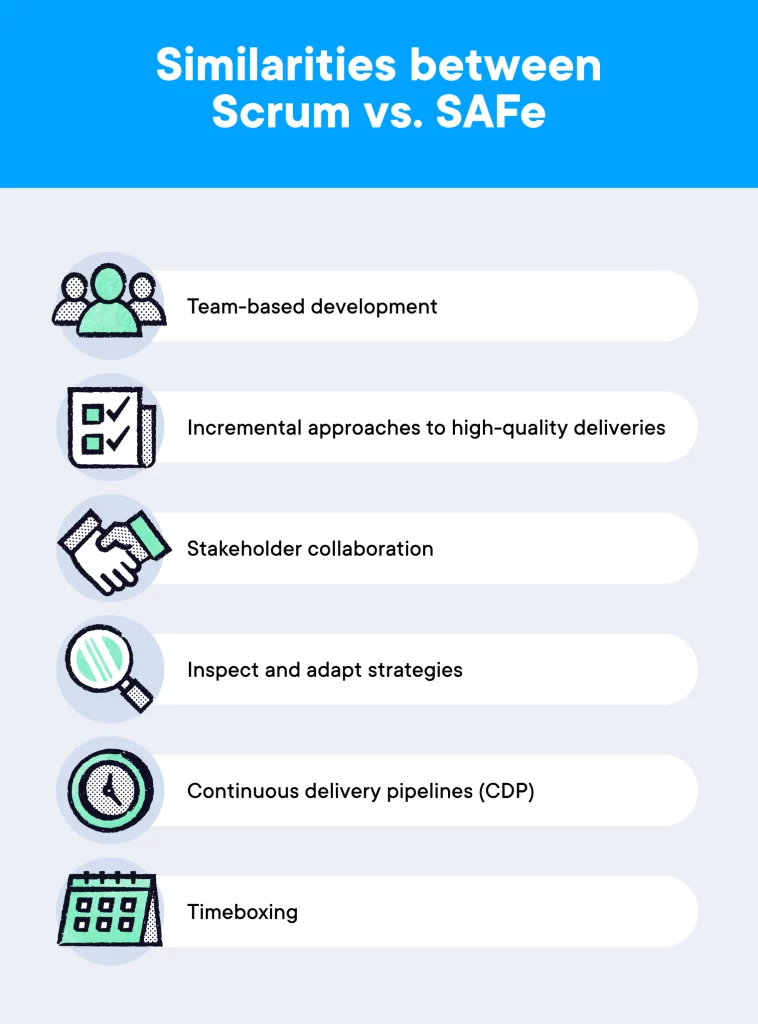
- Similarities between Scrum and SAFe
- Improve your software delivery process with Pluralsight Flow
Describe Scrum.
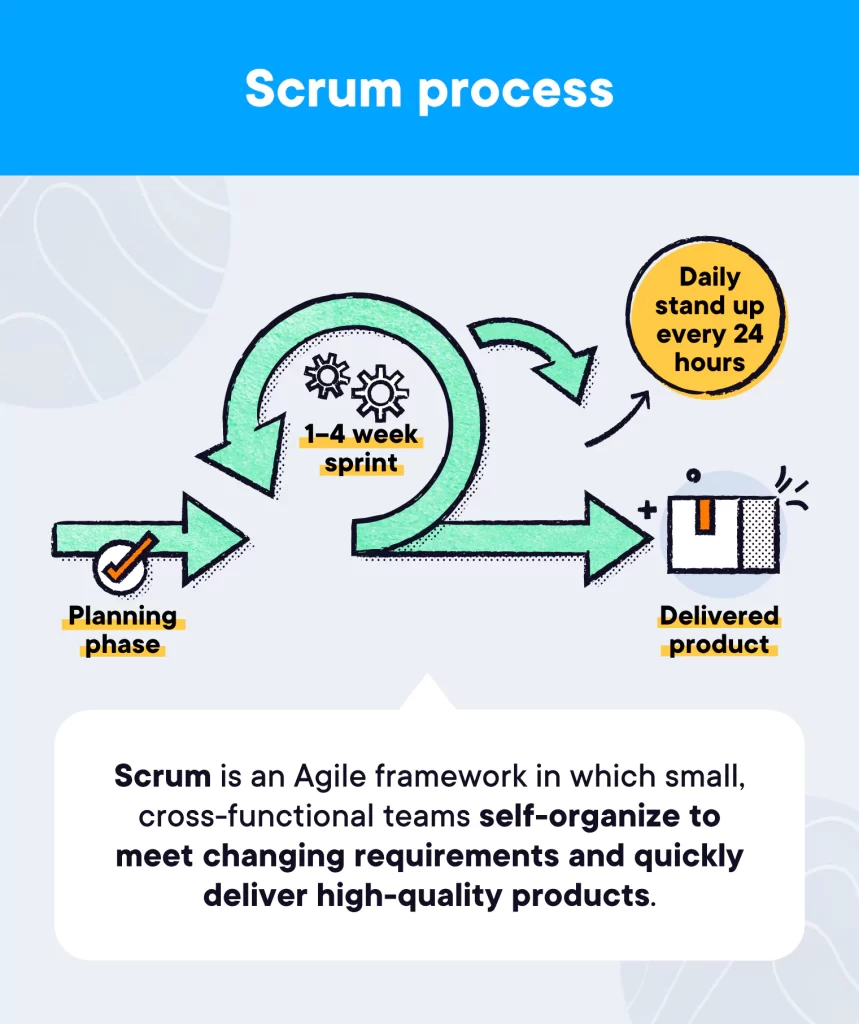
Small, self-organized teams produce high-quality software quickly using the Scrum Agile paradigm. Scrum development emphasises simplicity and builds flexible teams that deliver products based on feedback from stakeholders. Scrum developers divide up big projects into manageable steps to make this work.
Scrum equips developers to handle a variety of problems and project types by forming cross-functional teams. Additionally, despite changing requirements, its small team structure maintains productivity and cost effectiveness. Smaller teams also guarantee that each developer knows who to contact about certain difficulties. This simplified design encourages teamwork and allows for a more thorough examination of team members’ work.
Three critical responsibilities are necessary for Scrum development:
Product Owners match a Scrum team’s objectives with those of customers and stakeholders. Insight or feedback about the needs of the product can also be obtained from them.
A Scrum team and the Scrum procedures are managed by Scrum Masters. They take out development roadblocks, keeping the team focused and productive.
The two responsibilities mentioned above assist Scrum teams in achieving the objectives specified during each sprint planning phase. They are the workers who really construct a product on the ground.
Cons and benefits of Scrum
Here are the key benefits and disadvantages of Scrum so you can better comprehend it.
Pros:
● Enhanced development procedures
● Quick turnaround times
● Within small teams, coordinating is simple
Cons:
● It’s challenging to scale up to larger projects.
● Demands team training
● Project deadlines and development cycles might not always coincide.
For whom is Scrum ideal?
Scrum is a useful tool for autonomous teams and small organisations. Use Scrum in particular if your developers encounter:
● Regular feedback from customers and stakeholders
● Teams must adjust to shifting deliverables
● Prior to supplying high-quality products, there are few turnaround times.
What is SAFe?.
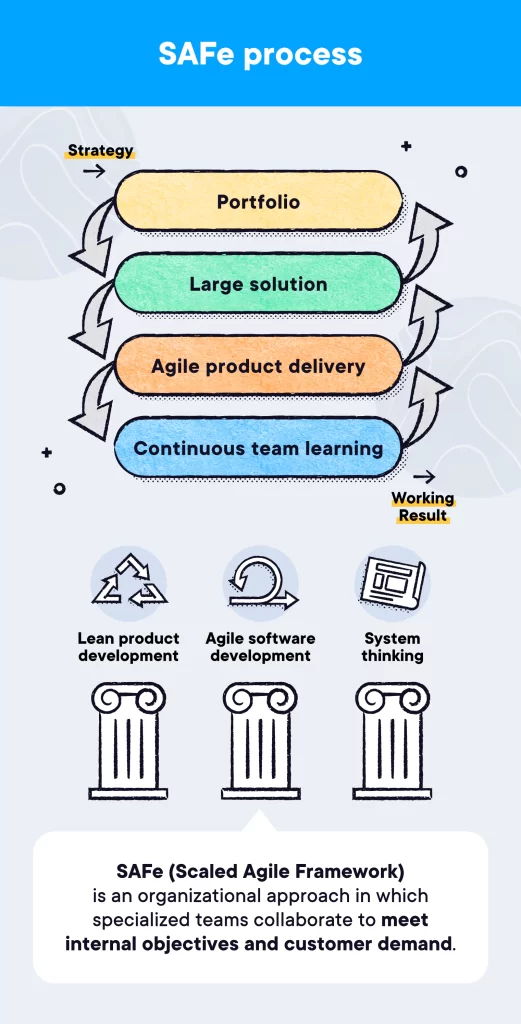
The Scaled Agile Framework (SAFe) aids businesses in establishing goals and satisfying client requests. SAFe is more broad than Scrum, which focuses on a focused focus and small teams. In order to deliver products that are too big or complex for Scrum, it coordinates numerous groups and leaders.
Scrum’s flexibility is traded for a more strict structure in SAFe. SAFe establishes objectives that differ depending on the team, but it also offers continual development. However, these various organisations support one another and work towards the same long-term objectives. Three key tenets of SAFe are incorporated to govern this organisation:
● Processes are improved and waste is reduced through lean product development. With this economical strategy, productivity is maintained throughout ongoing development.
● Agile software development involves on-the-fly incremental adjustments. This iterative process takes feedback and new requests into account. Although less adaptable than Scrum, SAFe still allows for quick changes in development.
● A development strategy called “System Thinking” creates solutions from the ground up. Teams would incorporate every part of the system when creating a product. This strategy emphasises how all system components interact and fit into broader systems.
Cons and benefits of SAFe
Similar to Scrum, some teams benefit more than others from SAFe’s advantages and disadvantages.
Pros:
● For enterprises, agility and a competitive edge
● Improved teamwork between teams
● Additional safeguards to stop product problems
● Enhanced internal processes at the corporate level
Cons:
● Inadequate for startups and small enterprises
●Teams must acquire a common language for Agile.
● Relies on a top-down, more rigid framework
Who is SAFe best for?
Organisations that apply Agile at an enterprise scale benefit most from SAFe. It is best suited to companies that:
● Oversee several teams
● Adopt a top-down leadership style.
● Create elaborate, multi-team solutions
Key differences between SAFe vs. Scrum
Before going over each section at length, here are the major differences between Scrum and SAFe.
| Category | Scrum | SAFe |
| Organization structure | Small organizations with independent teams | Enterprises with interconnected teams |
| Development philosophy | Fast, continuous development | Goal setting with organizational commitment |
| Implementation | Small teams with straightforward goals | Organizations tackling complex projects across teams |
| Processes | Lightweight, flexible, and iterative software delivery | Clear objectives set with a predetermined schedule |
| Framework requirements | A whole team must embrace Scrum | An entire organization must embrace SAFe |
| Team roles | Less than 12 members broken into three roles | Dozens of employees working within several roles |
| Dependencies | Coordination within teams | Alignment between teams |
| Timeframe | Sprints last one to four weeks | Sprints last two weeks |
Improve your software delivery process with Pluralsight Flow
Careful thought must go into choosing between Scrum and SAFe. The needs of each framework must be compared to a leader’s resources and objectives. The process of becoming Agile-aware can completely alter the way you approach development. You may satisfy consumer needs and make your business run like a well-oiled machine by using the proper strategy.
Your labour doesn’t stop when you make a decision, of course. Your software delivery procedure can be further enhanced using Pluralsight Flow. To find strengths and potential improvement areas, Flow examines how your teams operate inside any framework.